Braces for kids, teens, and adults
Braces correct crowding, overbites, underbites, and other alignment issues at any age. At Spark Orthodontics, treatment starts with a free Spark Smile Assessment that includes an exam, X-rays, and photos, normally valued at over $249, at no cost. From there, your orthodontist builds a plan around your smile, your timeline, and your budget.
- Professional exam and consultation
- Digital X-rays
- Photos
Braces for Teens & Pre-Teens
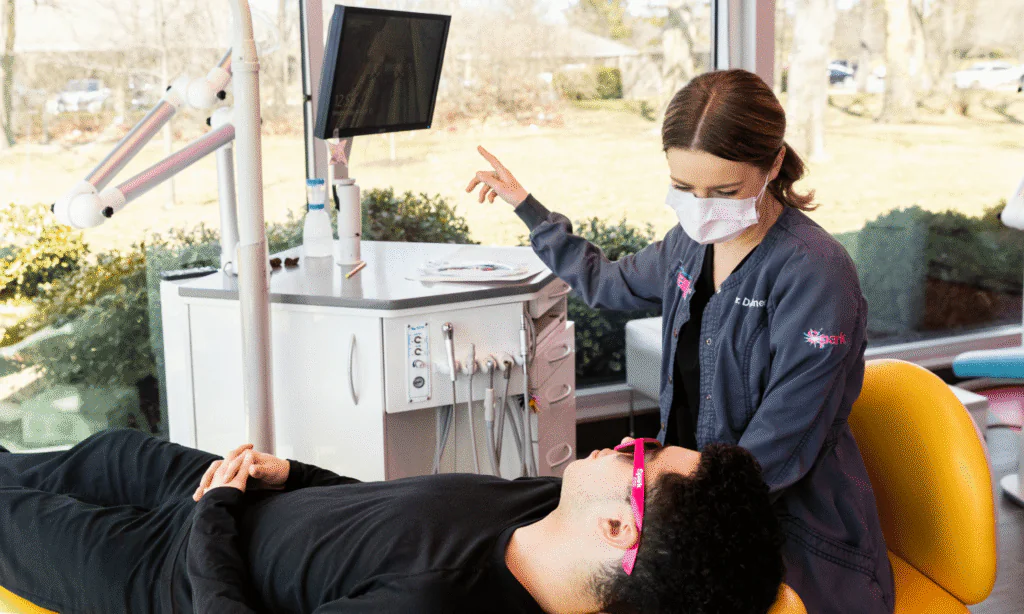
The American Association of Orthodontists recommends a first orthodontic checkup by age seven. Catching crowding or bite issues early often means a shorter, simpler treatment later. Our doctors treat kids and teens across all nine Spark offices with traditional metal braces.
Braces for Adults
Plenty of adults never finished treatment as kids, or their teeth have shifted since. Traditional braces work at any age, and ceramic braces or Invisalign give adults a more discreet option. Flexible, interest-free payment plans make it easier to fit treatment into a real budget.
Ceramic braces
Ceramic braces use stain-resistant, tooth-colored material that blends in far more than metal, and they work just as well. Coffee, red wine, and curry can still stain the elastic bands between adjustments, so that’s worth weighing before you choose. Your orthodontist will help you decide between metal, ceramic, and clear aligners at your free assessment.
What to expect during treatment
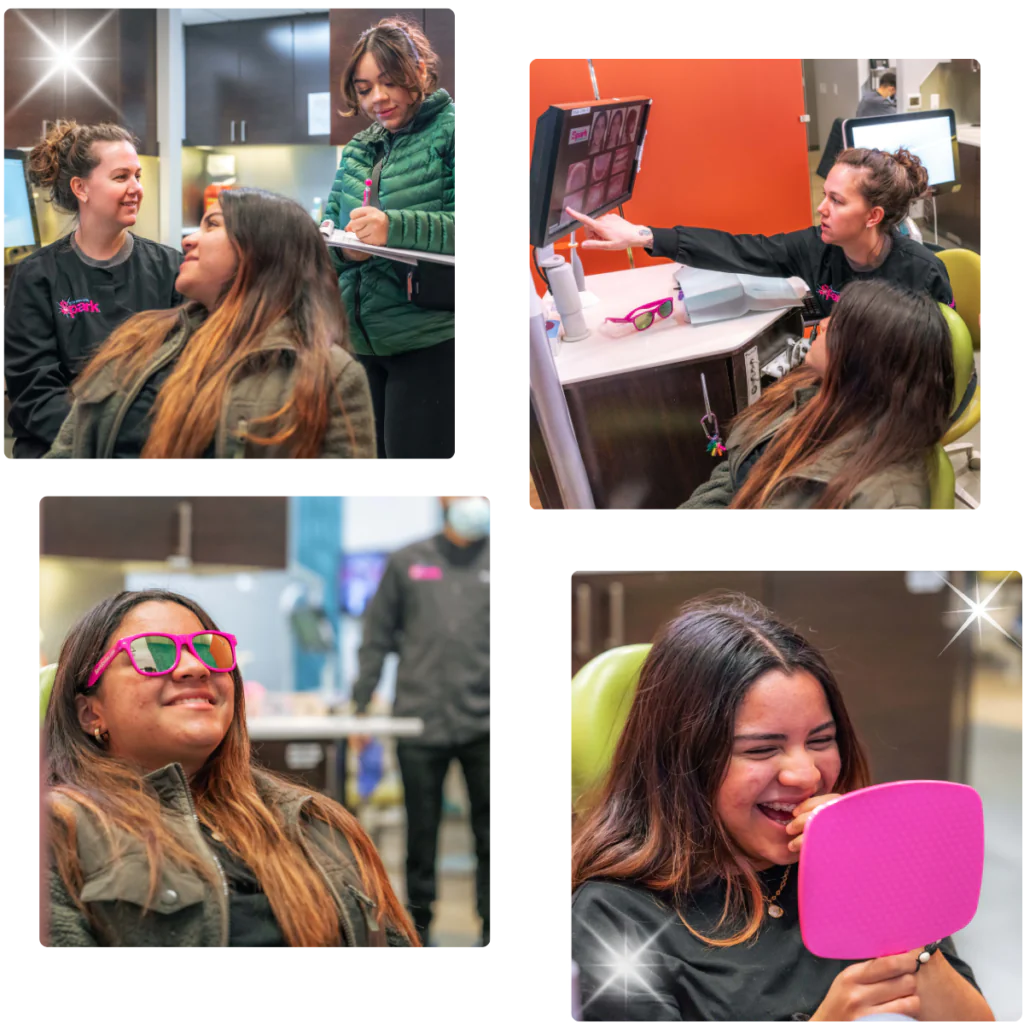
Most patients visit the office every six to eight weeks for adjustments. Treatment length depends on your case, and your orthodontist will give you a realistic timeline at your first visit. Between visits, our taking care of your braces guide covers brushing, flossing, and what to eat.

Ceramic Braces
For many adults considering orthodontic treatment, ceramic braces are an appealing option that are more discreet. Stain-free ceramic braces made from composite materials blend in much better than metals, helping to increase your confidence while being just as effective as traditional braces.
Here are a few things to think through to find out if ceramic braces would be a good fit for you and your lifestyle!
- Would a more discreet treatment option make a difference in your life?
- Are you a non-smoker?
- Are you okay with limiting your intake of black tea, coffee, colas, red juices and curried foods? These foods and drinks can stain the bands of ceramic braces.
Do I Need Orthodontic Treatment?
If you’re wondering if braces are necessary for you or your child’s smile, here are eight of the most common conditions that are signs orthodontic treatment is necessary. Left untreated, these problems can lead to jaw pain, wear and tear on precious tooth enamel, more opportunities for tooth decay and periodontal disease, speech problems, and low self-esteem. Many orthodontic patients may have questions about the following conditions that we often see in patients requiring orthodontic treatment:
If you or your child has a crossbite, their upper teeth sit inside their lower teeth on one side when they bite down. Similar to an underbite, front top teeth can also fall behind lower teeth. Without having treatment, children with crossbites can develop receding gums, TMJ, loose teeth, worn-down tooth enamel and a “crooked” face and jaw.
If you or your child’s mouth does not have enough room for his or her teeth, they begin to crowd together. We can sometimes solve this common problem by removing a tooth or two. At other times, we may be able to fix it simply by expanding the jaws with a small appliance. We call misalignments malocclusions and we treat them to give our patients their ideal smile!
A dental midline refers to the line between our two upper and lower front teeth. If these four teeth don’t meet just right, a child’s backbite will not match and fit properly. Over time, this will lead to problems with the way their jaws function.
We say children have an openbite when their lower and upper front teeth have no overlap. Children who suck their thumbs or continually thrust their tongues against their front teeth are especially prone to developing this common problem.
Children with overbites have upper front teeth that extend out over their lower front teeth. This can result in biting or chewing difficulties. A child with a really severe overbite could even feel their lower front teeth biting into the roof of their small mouths.
Protrusion is when someone has protruding teeth. If you or your child have protrusion, you will see that the upper or lower teeth point too far forward. This affects the way children’s small jaw functions as well as the how they smile. We call misalignments malocclusions and we treat them to give our patients their ideal smile!
Spacing issues can be present with both children and adults. Children frequently have gaps between their teeth. For baby teeth, this doesn’t present much of a problem. If secondary teeth grow with gaps between them, orthodontic treatment can help you feel more confident about your appearance by resolving spacing issues.
When the lower jaw sticks out and the lower front teeth sit inside the uppers, we refer to it as an underbite.
Cost depends on your treatment plan, and we review it in full at your free Spark Smile Assessment before you commit. We offer interest-free payment plans and accept CHIP, Medicaid, and most insurance plans.
No. Braces move teeth at any age. Many of our patients are adults who never had treatment as kids or whose teeth have shifted over time.
Every case is different. Most treatments run between 12 and 30 months, and your orthodontist will set expectations at your first visit.
*Total Value $249. Offer good at all Spark Orthodontics locations. No purchase necessary. Offer good at any time. No expiration. A proposed treatment plan could require a visit to your child’s dental provider prior to beginning orthodontic treatment, the cost of which is not included in this offer. Additional fees may be incurred in individual cases. Complimentary orthodontic consultation includes visual orthodontic evaluation, Panoramic X-ray, photos, impressions (if necessary), and doctor examination to determine eligibility and treatment type. Jason Hartman, DMD, MS
Invisalign®, the Invisalign logo, and iTero®, among others, are trademarks and/or service marks of Align Technology, Inc. or one of its subsidiaries or affiliated companies and may be registered in the U.S. and/or other countries.